Instrument
chromnil one
Every step of HPTLC with planar bioassays in one instrument, from the sample vial to the image of the finished plate, on about 0.1 m² of bench.
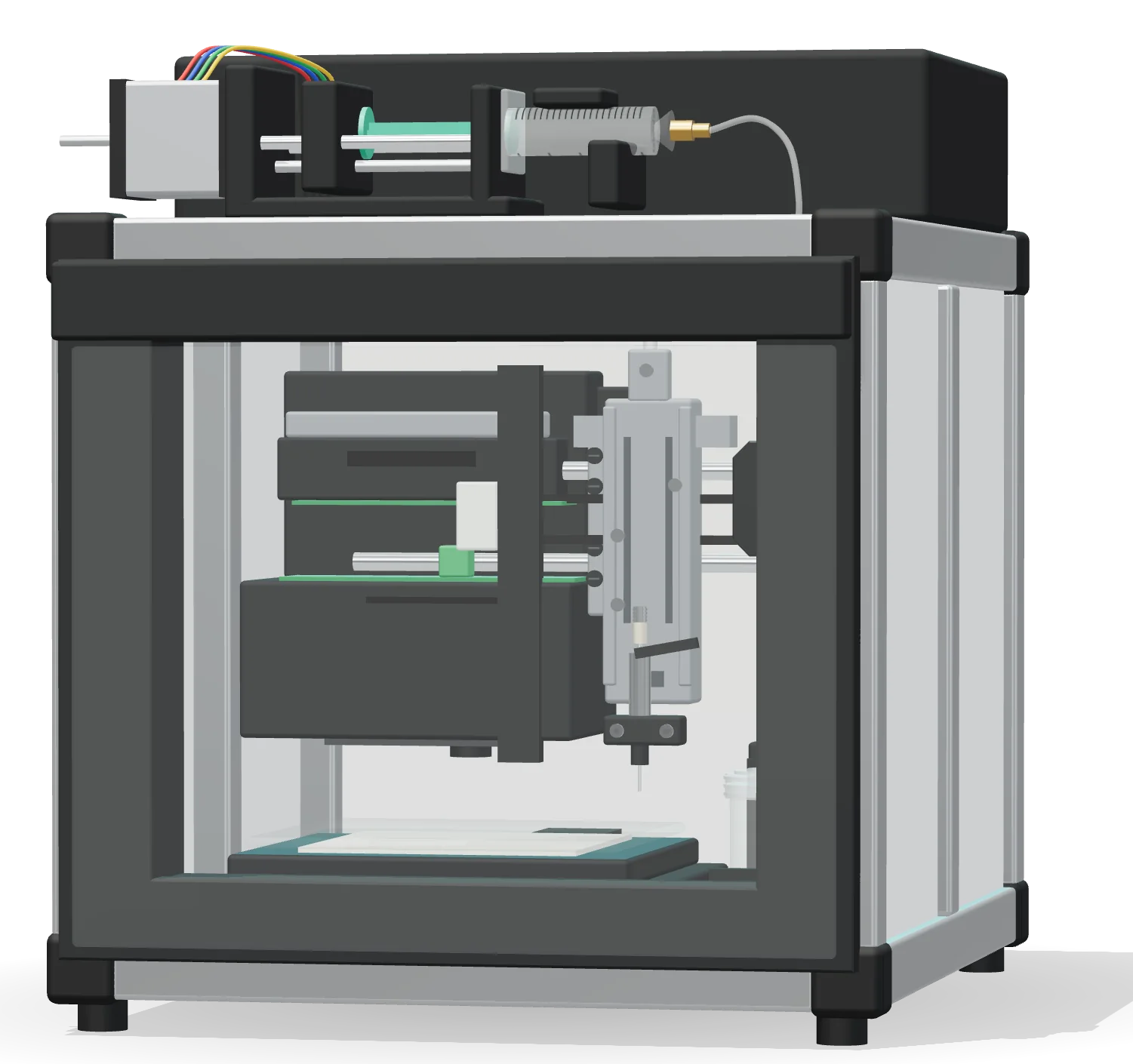
Inside
Key modules, and where they sit
Sample application, development and imaging share one plate holder and one housing. The nebulizer for bioassays and reagents and the incubator are modules connected to the instrument and controlled from the same software.
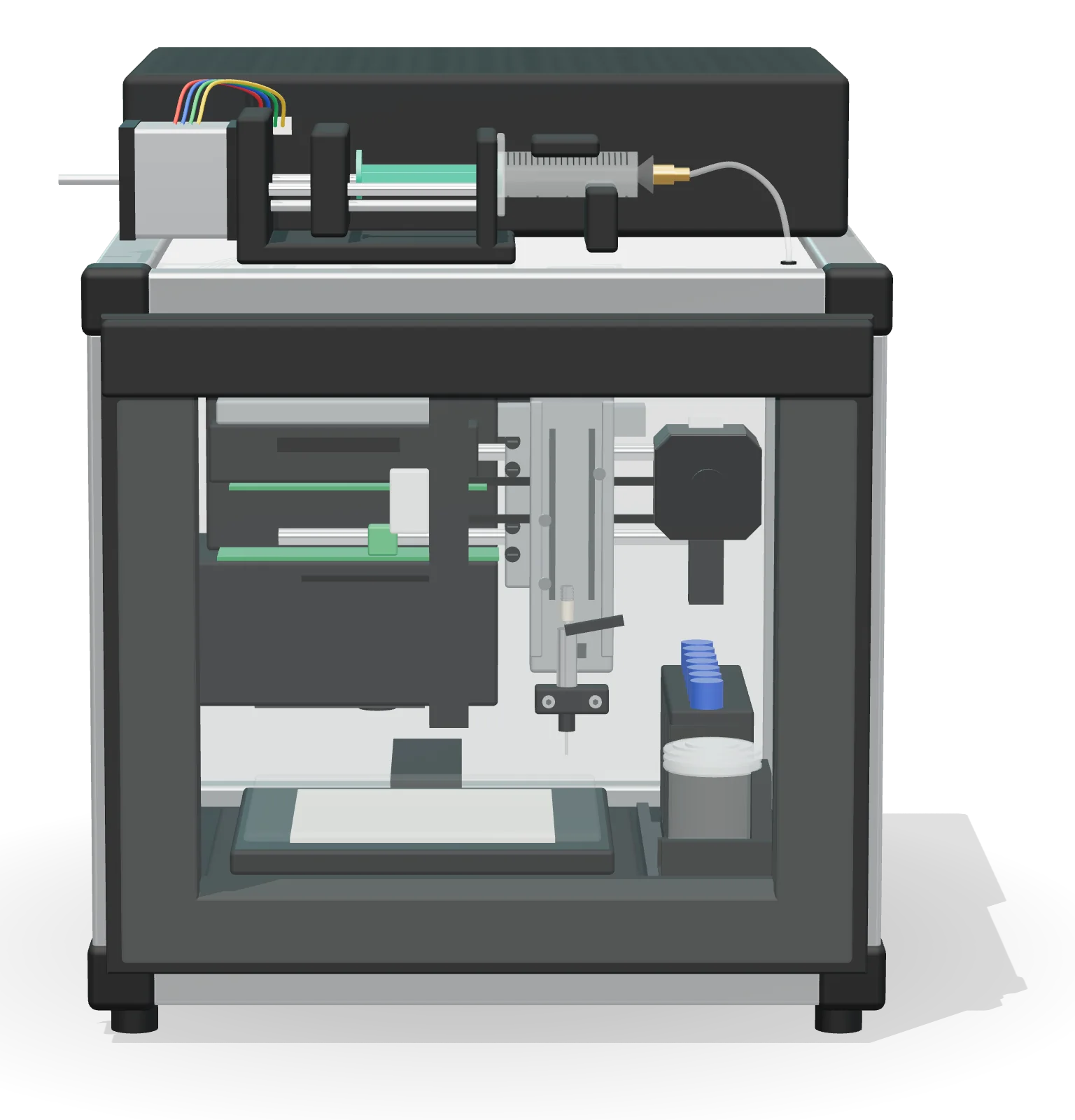
In the instrument
- Sample rackHolds up to 9 vials with 1–2 mL each, for reusable glass or single-use plastic vials.
- ApplicatorApplies samples and mobile phase onto the plate.
- Plate holder and heatingHolds the 10 × 10 cm HPTLC plate for application, development and detection, with integrated heating for drying and derivatization where required.
- Camera and illumination12 MP camera with UV and visible light for detection and analysis.
- Syringe pumpPumps the mobile phase onto the plate continuously for development.
- ControlControlled from a connected computer over Ethernet or Wi-Fi; no internet connection needed.
Connected modules
- NebulizerApplies cell suspensions, substrate solutions and derivatization reagents as a fine, uniform mist, controlled from the instrument.
- IncubatorKeeps the seeded plate at 30–37 °C for a set time, controlled from the instrument.
Specifications
Specifications
Method
- Method
- HPTLC with effect-directed analysis (planar bioassays)
- Process steps
- Application, development, bioassay, derivatization, detection
- Data export
- Images in standard image formats
Plate and samples
- Plate
- 10 × 10 cm HPTLC plate, supplied by the user (a standard 20 × 10 cm plate cut in two); tracks per plate depend on the band width
- Sample capacity
- Up to 9 samples, 1–2 mL each
- Vials
- Reusable glass or single-use plastic
Application and development
- Application
- Drops of about 10 nL; a typical band takes about 1 µL
- Development
- Mobile phase dosed continuously by the instrument, about 2 mL per plate (up to 10 mL); includes integrated saturation chamber
Bioassay and derivatization
- Bioassays and reagents
- Any test system or reagent that can be sprayed as a liquid: cell suspensions, enzyme and substrate solutions, derivatization reagents
- Derivatization
- Connected nebulizer module, with plate heating in the instrument
- Incubation
- Connected incubator module, 30–37 °C, with controlled temperature and time
Detection
- Illumination
- UVA 365 nm, UVC 265 nm, visible light, white-light back illumination
- Camera
- 12 MP
- Evaluation
- Currently evaluated with quanTLC; integration into the chromnil software is planned soon
Instrument
- Size
- Instrument 26 × 41 × 36 cm, about 0.1 m² of bench space, plus the connected nebulizer and incubator modules
- Control
- From a connected computer over Ethernet or Wi-Fi; no internet connection needed
- Humidity control
- The main instrument housing includes humidity control
chromnil one, current configuration.
Coming in 2027
Be among the first labs to run chromnil one
Join the waitlist and we send you an email when ordering opens. Or talk to us about your methods today.